Hubbuy Walking Shoe Wear Guide: Pre-Purchase Checks
Hubbuy Walking Shoe Wear Guide: Pre-Purchase Checks
Hubbuy Walking Shoe Wear Guide: Pre-Purchase Checks
When buying everyday walking shoes, many people only look at the upper, brand logo, and size, but ignore the outsole that really determines grip performance and stability in use. For buyers viewing Chinese products through hub-buy.com, product page images, supplementary detail images, and pre-purchase questions can help you eliminate some obviously unsuitable candidate shoes before ordering, but you cannot rely on images alone to promise a specific service life.
This guide solves a specific problem: how to check the outsole wear risk of candidate shoes based on daily walking frequency and main surface. After reading, you can decide to keep a candidate, ask the seller for more details, or give up on a shoe with insufficient evidence. This article does not apply to judging whether already worn shoes pose medical risks, nor does it replace professional evaluation of shoes for wet, icy, or special work environments.
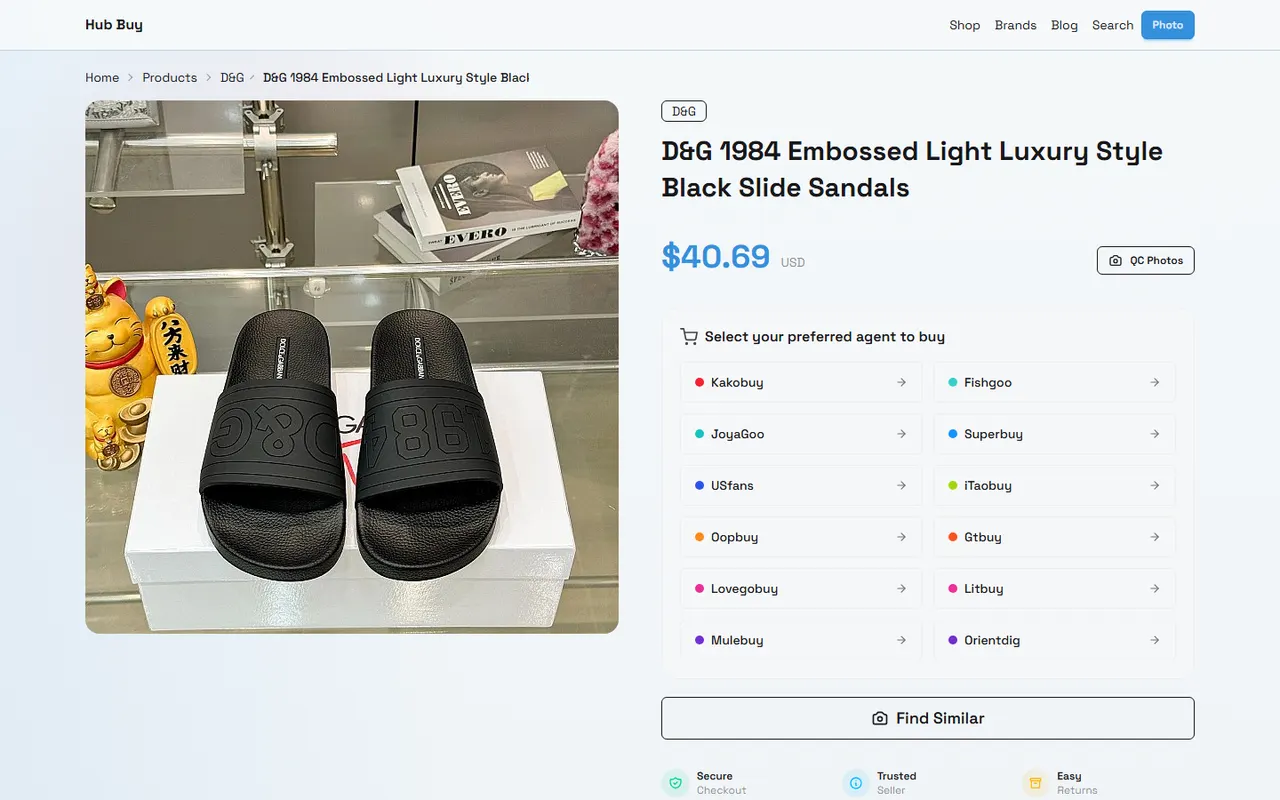
The illustrated product page can serve as an entry point for viewing sole and upper information before purchase. Actual judgment should still be based on currently visible product page images, seller supplementary images, and purchase conditions for the applicable destination. 🔎
First record daily walking frequency and main walking surface
Don't rush to compare appearance. Write down your usage scenario clearly, at least record the following four items:
About how long you walk each day, and whether you need to stand continuously
How many days per week you wear them, every day or occasionally swapping
Whether the main surface is indoor floors, sidewalks, rough concrete, stone floors, or mixed surfaces
Whether you often encounter rain, dust, gravel, stairs, or slopes
High-frequency commuters usually need a stable outsole contact area, clear and continuous tread, and no obvious weak points at the sole-to-upper connection. Occasional users can accept more appearance-oriented or lightweight designs, but should still confirm that the sole doesn't lack basic grip tread on common surfaces. Indoor walkers may face different sources of wear, and the risk of slipping on smooth floors is sometimes more important than simple abrasion resistance.
Don't simply equate "not walking much each day" with low wear. Short distance but high frequency repeated foot strikes will still concentrate wear on the heel and forefoot. Conversely, shoes used occasionally but exposed to moisture for long periods may also experience deterioration of connections or changes in material condition.
Determine likely high-wear positions from outsole zones
When viewing product images, you can divide the outsole into four zones: heel, forefoot, arch transition area, and edges. The functions of different zones are not the same.
The heel is usually the most prone to localized wear. If the image shows the heel contact surface, check whether the tread is continuous, whether the left and right sides are significantly asymmetrical, and whether the outsole edge already shows an excessively rounded contour.
The forefoot requires attention to the flex zone. During walking, the ball of the foot repeatedly pushes off. If the tread is too shallow or too sparse in the forefoot position, or if insufficient rubber coverage is visible at the flex point, it may lose clear contact surface faster in long-term use.
The arch transition area should focus on whether the outsole suddenly becomes thin or interrupted. If image angles are insufficient, don't infer the structural integrity here yourself; list it as a position needing supplementary images.
The edge areas relate to sole wrapping and upper connection. If side images show obvious gaps, lifting, or discontinuous connection lines between outsole edge and upper, confirm with the seller first, rather than interpreting these details as normal design.
Check tread depth, edge wrapping, and sole connection
Product images can help you spot visible problems, but cannot accurately measure actual tread depth or prove grip on specific surfaces. Before purchase, check in the following order:
Is there an outsole front view, not just upper views?
Does the tread cover the main contact areas of heel and forefoot?
Is there sufficient spacing in the tread to reduce the impact of water, dust, or gravel retention?
Does the outsole edge wrap over areas prone to friction?
Are there clear, continuous detail images at the sole-to-upper connection?
Are real photos from multiple angles provided, rather than identical promotional images?
If images lack a ruler, scale reference, or multiple angles, don't write "tread looks deep" as a confirmed dimension. A safer expression is: images show relatively clear tread, but actual depth and material hardness still need seller confirmation. 🧭
Also note the shoe type. Slippers, sandals, and low-top casual shoes may have different outsole structures from athletic shoes needed for long walks. Similar appearance doesn't mean the same applicable scenario, and you absolutely cannot judge durability based solely on brand name or product descriptions like "comfortable."
Distinguish between details images can prove and lifespan that cannot be confirmed
The most important pre-purchase judgment is not guessing how long shoes will last, but distinguishing between evidence already seen and information still missing.
Images can usually help confirm:
Whether the outsole has visible tread
Whether tread covers major contact areas
Whether the sole edge has obvious lifting, cracks, or discontinuity
Whether the upper-to-outsole connection has visible abnormalities
Whether the product page provides detail images from multiple angles
Images usually cannot alone confirm:
Actual abrasion resistance lifespan of rubber or other outsole materials
Specific grip performance on wet surfaces
Compression, deformation, or separation after a period of wear
Maximum daily walking distance suitable
Whether outsole structure is identical across different sizes
Therefore, do not use conclusions like "guaranteed durable," "absolutely non-slip," or "definitely lasts long." Purchase decisions should be based on visible evidence, usage matching, and unresolved risks, not a single promotional claim. ⚠️
Filter by high-frequency commuting, occasional outings, and indoor walking
High-frequency commuting: prioritize keeping candidates with complete outsole information. Heel and forefoot should have clear tread, and sole edge-to-upper connection should be inspectable via images. If mainly on outdoor sidewalks or rough concrete, also confirm outsole coverage and edge structure.
Occasional outings: you can place appearance, weight, and styling needs more important, but cannot completely ignore surface conditions. If a shoe only provides upper images and your use scenario includes long-distance walking, slopes, or rain, insufficient evidence itself is a signal to be cautious.
Indoor walking: focus on whether the sole is too smooth, whether the contact surface is flat, and whether it easily traps sand. If mainly active in malls, offices, or indoor floors, grip stability and footstep noise may be more worth confirming than abrasion resistance on rough surfaces.
Build a pre-purchase scoring table for grip and durability
You can use a simple five-item checklist to organize candidate shoes. The score is not a laboratory conclusion but helps you compare evidence completeness.
Check Item | 0 points | 1 point | 2 points |
|---|---|---|---|
Heel tread | No image to judge | Partial image | Clear angle and complete coverage |
Forefoot tread | No image to judge | Partial tread visible | Tread range and continuity clear |
Edge wrapping | Unclear or suspected gap | Structure basically visible | Connection clear and no obvious abnormality |
Surface match | Clearly mismatched with main surface | Needs further confirmation | Basically matches main use scenario |
Evidence completeness | Only promotional images | Some detail images | Multiple real photos and key explanations |
A low total score doesn't mean the shoe is definitely not durable, but indicates insufficient verifiable information before purchase. A high total score also doesn't equal proven specific lifespan; still combine with size, return conditions, destination country shipping, and personal usage frequency.
If two shoes have similar price or appearance, prefer the one with more complete evidence and higher surface match. The value of this is not predicting an exact number of wear days, but reducing the probability of buying a shoe clearly unsuitable for your scenario. 📋
How to request supplementary images when evidence gaps are found
When asking sellers, questions should be specific about image content, not just "is quality good?" You can request:
Full frontal photo of outsole
Close-up photos of heel, forefoot, and sole edges
Side photos of sole-to-upper connection
Scale photos with ruler or common object
If multiple sizes exist, confirm whether outsole uses same structure
If sellers only resend promotional images or cannot provide photos of key areas, mark that candidate as insufficient evidence. Don't replace actual verification of the current product because of product name, brand label, or other buyers possibly having used similar styles.
When displaying or saving order, waybill, and chat screenshots, cover name, address, phone number, order number, and payment information. Pre-purchase checks don't require public disclosure of sensitive data. 🔐
Final action: keep, ask more, or give up candidate shoes
Handle candidate shoes with three outcomes:
Keep: main surface matches sole structure, and heel, forefoot, edge, and connection all have sufficient image support.
Ask more: shoe may fit usage but lacks outsole front view, connection details, or scale reference.
Give up: main use scenario requires strong grip or long walking, while product page long lacks key outsole information, or images already show obvious lifting, cracking, insufficient coverage, etc.
When making final choice, record your main surface, weekly wear frequency, confirmed outsole details, and unresolved issues. This way, even if viewing multiple candidates through hub-buy.com, you can maintain consistent judgment standards rather than being swayed by a single promotional image or vague durability description.
This checklist method can save time on repeated communication, wrong orders, and returns, but it doesn't eliminate all risks. It's more suitable for buyers who want to screen out clearly mismatched shoes before purchase; if you need to deal with wet surfaces, professional work environments, long-distance sports, or special foot needs, it's not recommended to make final decisions based solely on ordinary product page images.
Agent Platform Shopping FAQ
1. Which product categories are listed in the hub-buy.com spreadsheet?
The hub-buy.com spreadsheet includes footwear, apparel, bags, accessories, jerseys, fragrances, hats, scarves, belts, and a range of household daily necessities.
2. What should I do if I'm not satisfied with the product I received through hub-buy.com?
Reach out to the customer service department of your agent platform without delay. For most non-specialty items from Chinese merchants, a 5-day unconditional return and exchange policy applies. If you are unhappy with the purchase, you may ask for a return. In case the item has already been delivered to your location and you find a quality defect, contact the agent platform's customer service so they can assist you in contacting the merchant to discuss a compensation arrangement.
Customer service email addresses for each platform are listed below:
kakobuy: [email protected]
oopbuy: [email protected]
usfans: [email protected]
hipobuy: [email protected]
superbuy: [email protected]
3. Which hub-buy.com platform has the best coupon offer?
Kakobuy is recommended because it currently provides a $15 discount code with no minimum spending requirement. This is an excellent deal for those ordering small parcels. The promo code is kakobuy888.
Browse our latest products and find your next favorite item.